
Financial Aid Adult Students NJ Night Classes New Brunswick
HighSchoolEquivalent.com is an adult education provider based in New Brunswick, New Jersey, offering flexible online and blended learning programs. We help adults navigate financial aid, complete their GED or HiSET, and prepare for careers in teaching, real estate, nursing, and child development — all with bilingual support in English and Spanish.
It’s 9 PM in New Brunswick. The kids are finally asleep, the dishes are done, and you’re scrolling through your phone wondering if it’s too late — too late to go back to school, too late to change careers, too late to finally finish what you started. You’re not alone. Thousands of adults across New Jersey feel the exact same pull every single night. The difference is that some of them pick up the phone and call a place like HighSchoolEquivalent.com to ask one simple question: “How do I pay for this?”
The answer, it turns out, is more hopeful than you think. Financial aid for adult students in NJ isn’t some mysterious pot of money reserved for 18-year-olds. It’s a system built for people like you — people with jobs, families, and responsibilities. And night classes in New Brunswick are designed to fit into the hours you actually have available.
What Financial Aid for Adult Students Actually Is (And What It Isn’t)
Financial aid isn’t just one thing. It’s a mix of resources that can make school affordable. Here’s the breakdown:
- Grants — Free money you don’t pay back. The federal Pell Grant is the big one, and New Jersey has its own state grants like NJ TAG (Tuition Aid Grant) for eligible residents.
- Scholarships — Merit-based or need-based awards from schools, nonprofits, and community organizations. Some are small; some cover everything.
- Work-study — Part-time jobs on campus or with approved employers that help you earn while you learn.
- Loans — Borrowed money that must be repaid with interest. These should be your last resort, not your first plan.
What financial aid is not: it’s not a trap, it’s not only for full-time students, and it’s not only for people without a diploma. In fact, many adult learners qualify for grants that cover the full cost of a GED prep program or a certificate course. If you’re looking at GED classes or a career certificate, there’s likely a way to pay for it that doesn’t involve draining your savings.
Who This Is Really For
This is for the single mom in Somerset who’s been a server for ten years and wants to become a teacher’s aide. It’s for the warehouse worker in Edison who’s ready to get his real estate license. It’s for the recent immigrant from Mexico who’s working on her English and her GED at the same time, hoping to become a nurse.
It’s also for you — even if you’re not sure what you want to do yet. The point of financial aid isn’t to lock you into a specific path. It’s to remove the money barrier so you can choose your path. And in New Brunswick, the options are closer than you think. Whether you’re pursuing a ESL program to build your language skills or a ParaPro certification to work in schools, there’s a way to fund it.
What the Process Looks Like, Step by Step
Let’s walk through what actually happens when you decide to go for it. No jargon, no fine print — just the real steps.
- Fill out the FAFSA. This is the Free Application for Federal Student Aid. It takes about 30 minutes online. You’ll need your tax info, but it’s doable. If you’re not a U.S. citizen, you may still qualify for some aid — we can help you figure that out.
- Check New Jersey state aid. NJ has its own application process for state grants. Some are automatic if you’ve done the FAFSA; others require a separate form. The state of New Jersey requires you to be a resident and, for most programs, have a high school diploma or recognized equivalent like a GED.
- Talk to a school’s financial aid office. This is where it gets personal. A good advisor will look at your situation and tell you what you actually qualify for — not just what the brochure says.
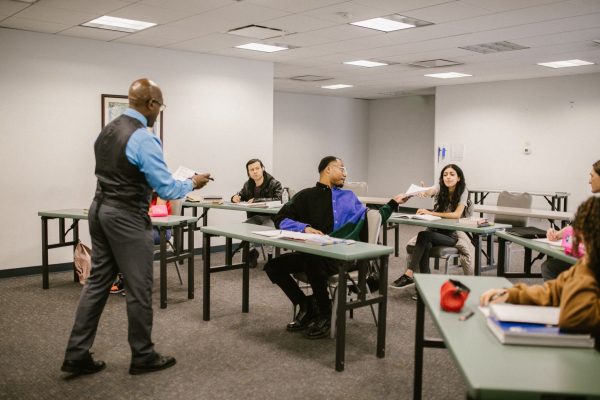
- Enroll and start. Once your aid package is set, you register for classes. Night classes in New Brunswick typically run from 6 PM to 9 PM, a few nights a week. Online options are even more flexible.
That’s it. That’s the whole process. It’s not glamorous, but it’s straightforward — especially when you have someone walking you through it. That’s exactly what we do at HighSchoolEquivalent.com. We don’t just hand you a syllabus and wish you luck. We sit with you, explain your options, and help you apply. Call us at (908) 240-6715 and we’ll talk you through it.
The Part Nobody Talks About
Here’s the honest truth: the hardest part of going back to school as an adult isn’t the math or the essays. It’s the shame. That little voice that says you should have done this years ago. That you’re too old. That you’ll be the oldest person in the room.
Stop listening to that voice. Here’s what’s actually true: adult learners are some of the most motivated students in any classroom. You’re not there because your parents made you. You’re there because you chose to be. That changes everything.
And you won’t be alone. In New Brunswick, adult education programs are full of people just like you — people with gray hair, people with toddlers at home, people who speak English as a second language. You’ll find your people. And you’ll find that the instructor respects you in a way that doesn’t always happen in a room full of teenagers.
The other thing nobody talks about is the money anxiety. Even with financial aid, there’s often a gap — a few hundred dollars here, a book fee there. That’s real. But it’s also manageable. Many programs offer payment plans. Some offer scholarships specifically for adult students. And remember: every dollar you invest in education is a dollar that pays you back over a lifetime of higher wages.
What Changes After You Graduate
Let’s talk about the after. Because that’s the whole point, right?
If you complete your GED, you unlock access to community college, trade schools, and better job opportunities. In New Jersey, the average wage gap between a high school dropout and a GED holder is significant — we’re talking thousands of dollars a year. If you go further and earn a certificate or an associate degree, that gap grows even wider.
But it’s not just about the money. It’s about the way you walk into a room. It’s about being able to help your kids with their homework. It’s about the pride in your mother’s voice when she tells her friends what you’re doing. That stuff doesn’t show up on a spreadsheet, but it’s real.
For many of our students, the GED is just the beginning. They go on to become certified nursing assistants, real estate agents, or teacher’s aides. Some even go back for bachelor’s degrees. The door doesn’t close after one credential — it swings open wider.
What Adults in New Brunswick Are Saying
We’ve had students come through our doors in New Brunswick who were sure they couldn’t do it. One woman, a mother of three, told us she hadn’t touched a textbook in fifteen years. She passed her GED in four months and is now studying for her TEAS nursing exam. Another student, a man in his fifties, got his real estate license and now works part-time while keeping his day job.
The common thread? They all started with a single phone call. They all asked for help with financial aid. And they all found that the process was less scary than they’d imagined.
The Honest Truth About Time and Cost
Let’s get specific about the numbers. For a GED prep program, the cost can range from a few hundred to a couple thousand dollars depending on the provider and whether you choose in-person or online. With a Pell Grant, many students pay nothing out of pocket. For certificate programs like ParaPro or CDA, costs vary but are often covered by state grants or scholarships.
Time-wise, most adult students in New Brunswick attend night classes two or three evenings a week. That’s about 6 to 9 hours of class time, plus homework. It’s a commitment, but it’s not impossible. It’s the same amount of time you might spend watching TV or scrolling on your phone.
One thing to note: New Jersey has specific requirements for state financial aid. You generally need to be a state resident and, for most programs, have a high school diploma or GED. If you don’t have that credential yet, that’s your first step. And that’s okay — it’s a stepping stone, not a roadblock.
How Classes Actually Fit Into a Busy Week
Let’s paint a picture of a real week. You work a 9-to-5. You pick up the kids. You make dinner. And then, instead of collapsing on the couch, you head to a night class in New Brunswick from 6 to 9 PM. It’s not easy, but it’s doable — and it’s only for a season.
Most programs are designed with working adults in mind. That means:
- Evening classes that start after work hours
- Online coursework you can complete when the kids are asleep
- Bilingual support so language isn’t a barrier
- Flexible scheduling that lets you miss a class and catch up
We also offer WhatsApp support, so you can text a question at 10 PM and get an answer without having to make a phone call. That level of flexibility is what makes it possible for real people with real lives to succeed.
What Happens the Moment You Call
When you call (908) 240-6715, you won’t get a robot. You’ll get a real person — someone who’s helped dozens of adults in New Jersey figure out their next step. They’ll ask you a few questions about your goals and your situation. They’ll explain your options clearly, in English or Spanish. And they’ll tell you what your next step should be, whether that’s filling out a FAFSA, taking a placement test, or just coming in for a tour.
There’s no pressure. No hard sell. Just honest guidance from people who’ve seen hundreds of adults succeed.
Frequently Asked Questions
Can I get financial aid if I already have a high school diploma?
Yes. Financial aid is not just for people without a diploma. Grants and loans are available based on income, enrollment status, and the program you choose. Even part-time night students can qualify.
Do I need to complete the FAFSA to get financial aid?
For most federal and state aid, yes. The FAFSA is the starting point. It’s free to fill out and takes about 30 minutes. Our team can walk you through it step by step.
What if I’m undocumented or a non-native English speaker?
You still have options. Some state and private scholarships don’t require a Social Security number. We offer bilingual support in English and Spanish to help you find what you qualify for.
How much does it cost to start classes in New Brunswick?
It depends on the program and your financial aid package. Many students pay little or nothing out of pocket with grants. Call us at (908) 240-6715 to get a personalized estimate.
Your Next Steps (This Week)
You don’t need to have everything figured out today. You just need to take one small step. Here’s a simple plan:
- Call or text (908) 240-6715. It costs nothing and commits you to nothing. Just ask your questions and see what you learn.
- Write down your goal. One sentence. “I want to get my GED.” “I want to become a real estate agent.” Put it where you’ll see it every day.
- Set aside 30 minutes to start the FAFSA. Even if you don’t finish it, starting is half the battle.
- Ask your employer about tuition assistance. Many companies in New Jersey offer this and don’t advertise it. It’s free money.
- Talk to someone you trust. Tell them what you’re planning. Accountability makes a difference.
- Visit HighSchoolEquivalent.com. Browse the programs, read the testimonials, and imagine yourself on the other side.
That’s it. Six small steps. None of them require you to quit your job, rearrange your whole life, or make a huge financial commitment. Just start.
Ready to Start? We’re Here to Help
📞 Call or text: (908) 240-6715
Available in English and Spanish · Monday–Saturday
Or visit HighSchoolEquivalent.com to register online
The truth is, you’ve already done the hardest part. You’ve admitted to yourself that you want more. You’ve read this entire article. You’ve imagined what it would be like to have a credential, a career, a future that’s yours. That’s not nothing. That’s the beginning of everything.
So take the next step. Call us, text us, or send a WhatsApp message. We’ll be here — in New Brunswick, in New Jersey, and online — ready to help you figure out how to make it work. Because you can. And you’re worth it.

You may also like

ESL English Classes for Adults in Bayonne: How Long?

Programas Educación Adultos NJ Rápido Passaic | HighSchoolEquivalent